
Self Exclusion Australia Options
Self Exclusion Australia Options: A Practical Starting Point for Safer Gambling Control
Self exclusion in Australia is designed for people who need a firm barrier between themselves and gambling access. For Stay Casino readers, this page should be understood as a responsible gambling resource, not as encouragement to continue gambling. Gambling is restricted to adults, and anyone who feels pressure, stress, loss-chasing, or financial discomfort should step away and use support tools before the situation becomes harder to manage.
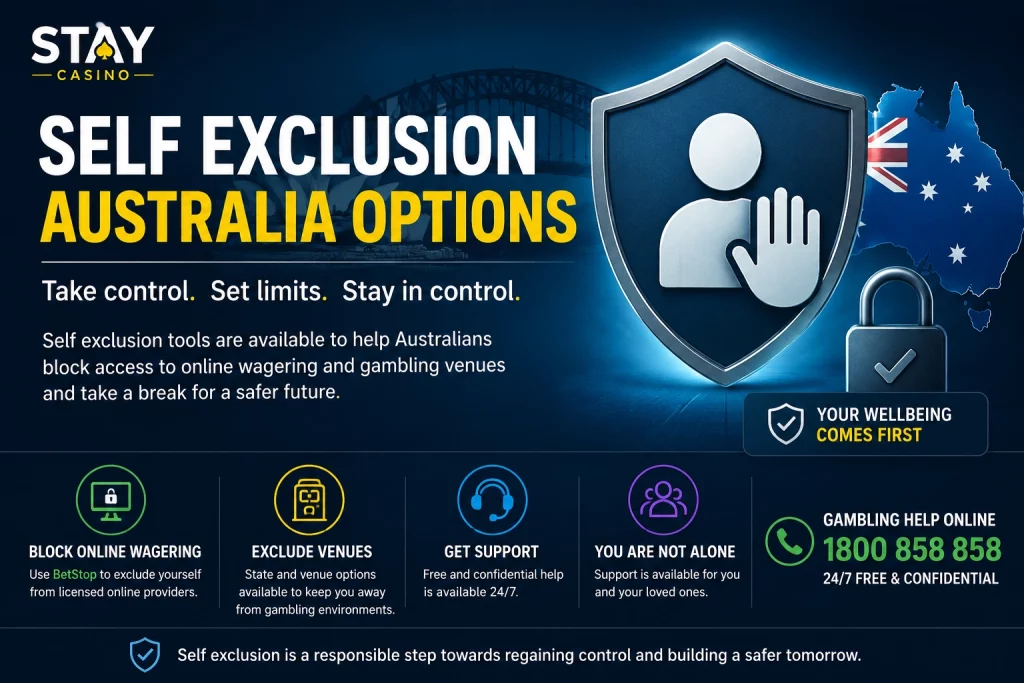
In Australia, self exclusion can apply to online wagering, phone betting, land-based venues, clubs, pubs, casinos, and other gambling environments depending on the state or territory. The main national tool is BetStop, the National Self-Exclusion Register, which lets people block themselves from licensed Australian online and phone wagering providers. According to BetStop, registered users cannot place bets, open new betting accounts, or receive marketing messages from covered providers.
Self exclusion is not only for people who feel gambling is already out of control. It can also work as a preventive limit. Some people use it after noticing that gambling is taking too much time, affecting mood, creating debt pressure, or becoming a repeated response to boredom or stress. A break creates space to review behaviour, speak with support services, and rebuild routines that are not connected to gambling.
For users who previously visited Stay Casino pages such as Login, the safer approach is to avoid returning to account access pages if gambling no longer feels controlled. A person considering self exclusion should not treat login access as a neutral action. It can become the first step back into a cycle they were trying to stop. In that situation, practical barriers are more useful than willpower alone.
| Self Exclusion Option | What It Covers | Best Used When | Helpful Official Source |
|---|---|---|---|
| BetStop National Register | Licensed Australian online and phone wagering providers | Someone wants one central block across covered online wagering accounts | BetStop Australia |
| Venue Self Exclusion | Clubs, pubs, hotels, casinos, and gaming venues depending on location | Someone wants to stay away from physical gambling environments | Gambling Help Online |
| State or Territory Programs | Local gambling venues and regional support systems | Someone needs rules specific to NSW, VIC, QLD, SA, WA, TAS, ACT, or NT | Self Exclusion Support |
| Account-Level Closure | Individual gambling accounts where direct closure is available | Someone wants an immediate account-specific barrier while arranging broader exclusion | Operator responsible gambling section |
A responsible gambling page should also explain the difference between a soft break and formal exclusion. A soft break might mean deciding not to gamble for a few days, turning off notifications, or avoiding betting-related content. Formal self exclusion is stronger because it creates an external barrier. Once active, the person should not be able to use covered services during the chosen exclusion period.
The Australian Government states that BetStop can be used for a chosen period from a minimum of 3 months up to a lifetime. This matters because short breaks do not suit everyone. Some people only need a cooling-off period, while others need a long-term block that removes access entirely. The best option depends on the level of risk, the person’s habits, and whether gambling has already caused financial or emotional harm.
For anyone considering a Bonus, self exclusion should come first if gambling is already causing stress. Bonus offers, free spins, cashback messages, and promotional emails can make it harder to stop because they create the feeling that there is still value to claim. That is why BetStop also blocks direct marketing from covered online and phone wagering providers after registration.
Self exclusion works best when combined with practical account and device changes. A person can unsubscribe from gambling emails, block payment routes where possible, remove gambling apps, ask banks about gambling transaction blocks, and avoid sports or entertainment content that repeatedly shows betting advertising. The goal is not only to close one door, but to reduce the number of triggers around daily life.
A strong responsible gambling plan should also include support from another person. This could be a family member, trusted friend, counsellor, or financial support service. Gambling harm often becomes worse when someone tries to manage it privately. Speaking to a trained support service can make the process clearer and less isolating.
In Australia, Gambling Help Online provides free and confidential support, including 24/7 access through the national gambling helpline on 1800 858 858. This type of support is useful before, during, and after self exclusion. It can help someone understand their options, prepare for urges, and make a plan for money, time, and emotional triggers.
Self exclusion is not a punishment. It is a protective tool. The person using it is not “failing”; they are choosing a stronger structure because gambling access has become too easy or too risky. For Stay Casino content, this distinction is important: responsible gambling pages should reduce shame and increase practical action.
The first step is usually the hardest because it requires admitting that gambling no longer feels fully optional. After that, the process becomes more concrete. A person can choose the exclusion route, set the period, remove marketing exposure, and contact support. Each action adds friction between the person and gambling access.
For users who have not yet created an account through a Sign up page, self exclusion may still be relevant. Someone does not need to wait until they have multiple accounts or serious losses before using protective tools. If the urge to register feels compulsive, or if gambling thoughts are already affecting concentration, sleep, money, or relationships, it is reasonable to block access early.
Self exclusion in Australia should be viewed as part of a broader safer gambling system. BetStop covers licensed online and phone wagering, but land-based gambling may require separate venue or state-based exclusion. That is why a complete plan should consider both digital and physical access points.
In simple terms, the safest approach is to match the tool to the risk. If the problem is online betting, BetStop is central. If the problem is venue gambling, local venue exclusion is important. If gambling is connected to emotional stress, support services should be included immediately. If money is already affected, financial counselling may also be needed.
This first part sets the foundation: self exclusion is a formal barrier, not just a personal promise. It is most effective when used early, combined with support, and applied across every gambling access point that could pull someone back into harmful behaviour.
How BetStop Works for Australian Players
BetStop is the main national self exclusion option for Australians who want to block themselves from licensed online and phone wagering providers. It is especially important for people who feel that online access has become too quick, too emotional, or too difficult to control. Once a person is registered, covered providers must stop them from opening new betting accounts, placing bets, or receiving direct promotional messages.
Choosing the Right Exclusion Period
A person can choose a shorter exclusion period when they need a structured break, or a longer period when gambling has created repeated stress, debt, secrecy, or loss-chasing. The decision should be based on real behaviour rather than optimism. If someone has already tried to stop several times and returned quickly, a longer exclusion period may offer better protection.
Using the App page or mobile access can be risky for people trying to stop because gambling becomes available in seconds. For that reason, self exclusion should be combined with deleting gambling apps, turning off notifications, and removing saved passwords. The aim is to reduce both access and impulse.
Practical Steps Before Registering
Before registering for self exclusion, a person should prepare by collecting account details, checking where they usually gamble, and deciding whether they also need venue-based exclusion. This preparation makes the process more complete. BetStop may block many online wagering providers, but physical gambling venues and offshore websites may require separate action.
A person should also think about money controls. This can include lowering spending limits, removing saved cards, asking a bank about gambling blocks, or speaking with a financial counsellor if debts are already present. Self exclusion works better when access and money movement are both restricted.
| Step | Action | Why It Helps | Priority Level |
|---|---|---|---|
| 1. Identify gambling access | List online accounts, phone betting services, venue habits, and saved payment methods. | This shows where exclusion or blocking must be applied. | High |
| 2. Register for BetStop | Choose the exclusion period and complete the national registration process. | This creates a formal barrier with licensed Australian online wagering providers. | High |
| 3. Remove app access | Delete gambling apps, clear saved logins, and turn off promotional notifications. | This reduces fast impulse-based gambling behaviour. | High |
| 4. Block gambling payments | Ask your bank whether gambling transaction blocks are available. | This adds a financial barrier if urges return. | Medium |
| 5. Contact support | Speak with Gambling Help Online, a counsellor, or a trusted support person. | This provides structure beyond the technical block. | High |
Self Exclusion Readiness
Why Self Exclusion Should Include Marketing Blocks
Promotional gambling messages can make stopping harder. Emails, SMS offers, free spin reminders, and cashback campaigns can all trigger a return to gambling. That is why marketing restrictions are an important part of self exclusion. A person trying to stop should not continue receiving messages that encourage betting activity.
This also applies to content around Slots. Slot-style games often use fast rounds, bright visuals, and repeated reward patterns. For someone who is trying to step away, even promotional content about slots can become a trigger. Blocking marketing and avoiding related pages can reduce unnecessary temptation.
When Online Exclusion Is Not Enough
Some people gamble mostly online, but others move between online accounts and physical venues. If someone excludes online but continues visiting gaming rooms, casinos, clubs, or pubs with machines, the risk remains. A complete plan should cover every gambling environment the person actually uses.
Venue self exclusion can be arranged through local systems, gambling help services, or directly through participating venues depending on the state or territory. This may involve signing documents, providing identification, and confirming which locations should be included. It can feel formal, but the formality is useful because it creates a clear external boundary.
Building a Safer Routine After Exclusion
Self exclusion creates a block, but a person still needs something to replace the time and emotional pattern gambling used to fill. This might include exercise, structured hobbies, practical budgeting, study, work routines, or time with friends who are not connected to gambling. The replacement does not need to be perfect; it simply needs to reduce empty time and repeated triggers.
A person should also plan what to do when urges return. Urges are usually temporary, but they feel stronger when there is no prepared response. A useful plan may include leaving the device, calling someone, visiting a non-gambling place, checking a written reason for stopping, or contacting a gambling support service.
Why Self Exclusion Is a Responsible Choice
Self exclusion is sometimes misunderstood as an extreme step. In practice, it is a responsible and practical choice when gambling access is creating harm or risk. It gives the person time to regain control without constantly negotiating with temptation.
For Stay Casino readers, the key message is clear: if gambling no longer feels safe, optional, and controlled, self exclusion should be considered early. The sooner a person creates barriers, the easier it is to prevent deeper financial and emotional damage.
State-Based Self Exclusion Options in Australia
Self exclusion in Australia is not limited to one national system. BetStop is central for licensed online and phone wagering, but venue gambling is usually managed through state and territory frameworks. This matters because a person may block online betting and still remain exposed to gaming machines, casino floors, club gaming rooms, TAB areas, or hotel gambling spaces.
A complete self exclusion plan should match the person’s real gambling pattern. If the risk mainly comes from mobile betting, national online exclusion may be enough as a first step. If the risk includes physical venues, the person should also arrange venue-based exclusion through local services, gambling help providers, or the venue system operating in their state.
Comparing Online and Venue Exclusion
| Area | Online Self Exclusion | Venue Self Exclusion | What to Check |
|---|---|---|---|
| Main Access Point | Online and phone wagering accounts | Clubs, pubs, hotels, casinos, and gaming rooms | Where gambling usually happens most often |
| Typical Tool | BetStop National Self-Exclusion Register | State, territory, or venue-based exclusion program | Whether both systems are needed |
| Marketing Control | Can stop direct marketing from covered providers | May reduce venue access but not all advertising exposure | Email, SMS, app, and local venue triggers |
| Best For | People affected by fast digital betting access | People affected by gaming machines or casino visits | Personal gambling habits, not general assumptions |
Why Location Matters
Each Australian state and territory can have different processes for venue exclusion. A person in New South Wales may follow a different pathway from someone in Victoria, Queensland, Western Australia, South Australia, Tasmania, the ACT, or the Northern Territory. This does not mean the goal is different. The goal is always to prevent access to gambling spaces that are causing harm.
The practical difference is usually administrative. Some systems use paper forms, some involve gambling help services, and some may allow a person to nominate several venues. The person may need identification and may need to confirm the duration of exclusion. The important point is to start with the official state or recognised gambling support channel rather than relying on informal promises.
When Casino and Gaming Room Access Is the Main Risk
Some people do not gamble frequently online but struggle with physical venues. This can happen when gambling is part of a social routine, after-work habit, weekend pattern, or response to stress. In that case, blocking only digital access leaves a major gap.
The same applies to Games pages and game-related browsing. A person trying to self exclude should reduce contact with gambling-style content, even when it appears informational. Reading about games can still activate interest, especially if the person is already vulnerable to returning.
Support Services as Part of Exclusion
Self exclusion is more effective when it is connected to human support. A technical block can reduce access, but it does not automatically solve stress, debt, secrecy, boredom, or emotional triggers. Counselling and financial support can help a person understand why gambling became difficult to control and what needs to change around it.
Support services can also help someone choose the correct exclusion pathway. If a person is unsure whether they need BetStop, venue exclusion, bank blocking, or all of them, speaking with Gambling Help Online can make the choice clearer. This is especially useful when gambling has already affected rent, bills, study, work, family trust, or mental wellbeing.
Trigger Map for Self Exclusion Planning
What Happens After Exclusion Starts
After self exclusion begins, the person should treat the block as a foundation, not the whole solution. The first days or weeks may feel easier because access is reduced, but urges can return later. This is why a written plan is useful. It should include who to contact, what to do during cravings, which websites or apps to avoid, and how to handle money safely.
For users looking for FAQ information, the most common question is whether self exclusion can be reversed early. In most cases, exclusion is meant to be firm, and early cancellation may not be available depending on the program and selected period. This firmness is intentional because gambling urges often become strongest after the barrier is already in place.
Financial Barriers and Budget Protection
Money controls are important because gambling harm often continues through repeated small payments rather than one large decision. A person might tell themselves they will only spend a little, then repeat the action many times. Blocking transactions, removing saved cards, and asking someone trusted to help review finances can reduce this risk.
Financial counselling may also be useful where gambling has caused debt. This is not the same as gambling counselling, but the two can work together. Gambling support focuses on behaviour and triggers, while financial counselling helps with bills, repayments, debt pressure, and practical money planning.
Avoiding Offshore and Unlicensed Risk
A person using self exclusion should avoid offshore gambling sites. These websites may not follow Australian protections, may not participate in local exclusion systems, and may expose users to weaker complaint processes. If someone has self excluded but then searches for alternatives outside the covered system, that is a warning sign that more support is needed.
This is where personal honesty matters. Self exclusion should not become a challenge to bypass. It should be treated as a clear decision: gambling is no longer safe right now, so access needs to stay blocked. If the urge to bypass the block appears, the best response is to contact support immediately and strengthen the surrounding barriers.
How Stay Casino Should Present Self Exclusion Information
For a Stay Casino responsible gambling page, the tone should remain practical, calm, and non-promotional. The content should not push users back to gambling pages while discussing exclusion. Instead, it should explain available options, encourage early action, and direct readers toward official help sources.
The page can mention internal navigation only where it helps users understand risk areas. For example, account pages, bonus pages, app pages, slots pages, and games pages may all be triggers for someone trying to stop. Internal links should therefore be used carefully and not framed as invitations to continue gambling.
Building a Long-Term Recovery Environment
Self exclusion is strongest when the person changes the environment around gambling. That can mean avoiding certain venues, changing social routines, deleting apps, unsubscribing from gambling-related content, and replacing gambling time with structured activities. It can also mean telling one trusted person about the exclusion so there is accountability.
The goal is not only to stop gambling today. The goal is to reduce the conditions that made gambling easy to repeat. When someone removes access, reduces triggers, protects money, and gets support, self exclusion becomes part of a broader recovery structure rather than a single isolated action.
How to Maintain Self Exclusion and Reduce Relapse Risk
Self exclusion works best when it is treated as an active protection system, not a one-time form. Registering for BetStop or arranging venue exclusion is a major step, but daily habits still matter. A person should continue removing triggers, avoiding gambling content, protecting money, and using support services when urges appear.
The most stable self exclusion plan usually has three layers. The first layer is access blocking, such as BetStop or venue exclusion. The second layer is financial control, such as bank gambling blocks or card removal. The third layer is personal support, such as counselling, trusted contacts, or Gambling Help Online. Together, these layers create a stronger barrier than any single action alone.
Long-Term Self Exclusion Maintenance
| Maintenance Area | Recommended Action | Why It Matters | Warning Sign |
|---|---|---|---|
| Digital Access | Keep gambling apps deleted and avoid saving passwords for gambling sites. | Fast access can turn an urge into action within seconds. | Searching for ways to reopen or bypass accounts. |
| Marketing Exposure | Unsubscribe from promotional emails and block gambling-related notifications. | Promotions can restart gambling thoughts after a stable period. | Checking offers, bonuses, or free spin messages. |
| Money Protection | Use bank gambling blocks, spending controls, or trusted budget support. | Financial friction reduces impulsive gambling behaviour. | Moving money secretly or using new payment methods. |
| Support Routine | Contact Gambling Help Online, a counsellor, or a trusted person during urges. | Support reduces isolation and helps prevent relapse decisions. | Trying to manage strong urges alone. |
| Content Avoidance | Avoid gambling reviews, game guides, betting discussions, and promotional pages. | Even informational content can become a trigger. | Reading gambling content “just to check”. |
What to Do When Gambling Urges Return
Urges can return even after self exclusion starts. This does not mean the exclusion has failed. It means the person needs to use the support structure around the block. The safest first step is to delay action. A person can leave the device, move to a public space, call someone, or start a practical task that interrupts the gambling thought pattern.
It is also useful to write down the reason for self exclusion. During an urge, the mind often focuses only on the possibility of gambling again. A written note can bring attention back to the real consequences: stress, money loss, secrecy, conflict, sleep problems, or emotional pressure. The note does not need to be dramatic. It only needs to be honest and clear.
For people browsing Links pages or external gambling resources, it is important to avoid using those pages as a route back into betting. Responsible gambling information should lead toward support, not toward new accounts or unblocked gambling options. If someone is searching for ways around exclusion, they should treat that as a strong warning sign and contact support immediately.
Safer Alternatives During the Exclusion Period
A person does not need to replace gambling with something extreme. The replacement activity only needs to interrupt the cycle. Walking, cooking, studying, cleaning, calling a friend, watching non-gambling content, or planning bills can all help. The purpose is to create distance between the urge and the action.
Some people also benefit from structured routines. Gambling often fills unplanned time, so a basic weekly schedule can reduce risk. This might include work or study blocks, exercise, family time, financial review, and entertainment that is not connected to gambling. Routine is not a cure, but it reduces empty space where urges can grow.
Self Exclusion Recovery
How Family and Friends Can Help
Support from family or friends should be practical rather than judgmental. The goal is not to shame the person, monitor every movement, or create conflict. The goal is to help them maintain barriers they have already chosen. This can include checking in, helping remove gambling apps, supporting budget planning, or encouraging contact with professional services.
A useful support person should avoid lending money for gambling-related debt without a plan. They should also avoid arguments during urges, because emotional pressure can make gambling thoughts stronger. Calm boundaries are more effective: no gambling funding, no covering up harm, and no encouragement to return to gambling environments.
When Professional Help Is Needed
Professional help is especially important when gambling has affected debt, rent, relationships, work, study, sleep, or emotional stability. A counsellor can help identify triggers and patterns, while a financial counsellor can help with debt and payment pressure. These services are not only for severe cases. They can also help earlier, before the harm becomes more serious.
If someone feels unable to stay safe from gambling even after exclusion, support should be contacted immediately. In Australia, Gambling Help Online and the national helpline can provide confidential assistance. A person can also speak with a GP or local mental health service if gambling is connected with anxiety, depression, or other emotional difficulties.
Final Guidance for Stay Casino Readers
Self exclusion is one of the clearest responsible gambling options in Australia. It gives people a formal way to step back from gambling access and reduce immediate risk. For online and phone wagering, BetStop is the key national system. For physical gambling venues, state-based or venue-based exclusion may also be needed.
The strongest approach is not to rely on one measure only. A person should combine exclusion with payment blocks, app removal, marketing controls, support contact, and a safer daily routine. This creates practical distance from gambling and reduces the chance of returning during a stressful moment.
Stay Casino readers should treat self exclusion as a protective decision. If gambling no longer feels controlled, affordable, and voluntary, the safest step is to stop, block access, and get support. Gambling should never come before bills, relationships, health, study, work, or personal safety.
The main point is simple: self exclusion is available before gambling harm becomes worse. A person does not need to wait for a crisis. Early action is valid, responsible, and often easier than trying to repair deeper harm later.






Comments