
How To Stop Gambling Australia
Understanding When Gambling Stops Being Entertainment
For many Australian players, gambling begins as a casual activity. It may start with occasional sports betting, online casino sessions, poker machines, or small wagers during social events. At first, the activity can feel controlled, exciting, and harmless. The problem begins when gambling is no longer entertainment and starts becoming a response to stress, boredom, financial pressure, loneliness, or emotional discomfort.
Stopping gambling in Australia requires more than simply saying, “I will not gamble again.” A stronger approach is to build a practical plan that limits access, protects money, reduces triggers, and connects the player with real support. For Stay Casino readers, this page focuses on clear steps that can help someone stop gambling safely and build a healthier routine without relying on gambling as a source of escape.
The first sign that gambling has become harmful is usually loss of control. A player may plan to spend a small amount but continue depositing after losses. Another warning sign is chasing losses, which means trying to win back money already lost. This pattern is especially dangerous because it turns gambling into a financial rescue attempt, even though the odds are not designed to solve money problems.
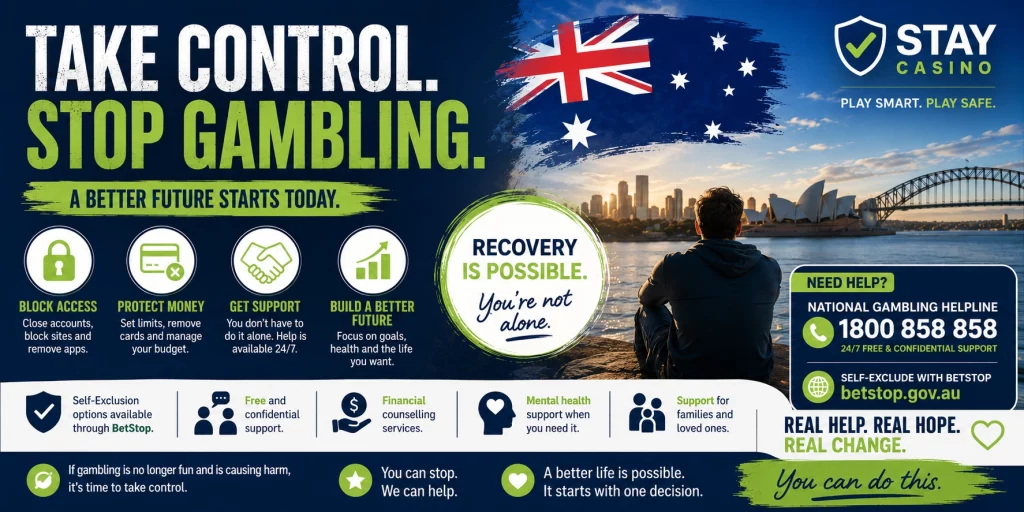
A person may also notice emotional changes. Gambling can create anxiety before a session, frustration after a loss, and temporary relief after a win. Over time, this cycle becomes exhausting. It can affect sleep, relationships, school or work performance, and personal confidence. When gambling becomes something a person hides, justifies, or regrets, it is time to stop and seek support.
Australian players have access to several support options. BetStop is Australia’s National Self-Exclusion Register and can block a person from licensed Australian online and phone wagering providers. Gambling Help Online is also available across Australia, and the National Gambling Helpline provides free and confidential support 24/7 on 1800 858 858. These services are designed for people who are affected by their own gambling or someone else’s gambling.
Start by Removing Immediate Access
The most important first step is to make gambling harder to access. When a player has active accounts, saved passwords, installed apps, stored payment cards, and promotional emails arriving every week, stopping becomes more difficult. Recovery works better when access is reduced immediately.
For Stay Casino readers, this means avoiding the Login page, ignoring any Bonus promotion, not creating a new Sign up account elsewhere, deleting the App, stepping away from Slots, avoiding all Games, using the FAQ only for account closure or limit information, and choosing support Links instead of promotional pages.
This internal linking should feel natural on the page. Each keyword can guide users away from risky behaviour and toward safer account management or educational pages. The tone should not encourage continued play. Instead, the page should make it clear that a player who feels out of control should stop, block access, and use professional support.
Removing access is not only about deleting apps. It also includes clearing saved cards, unsubscribing from casino newsletters, blocking gambling websites, turning off push notifications, and asking support teams to close accounts permanently. Each barrier creates time between the urge and the action. That delay can be enough to prevent a relapse.
Create a Personal Stop-Gambling Plan
A personal stop-gambling plan should be specific. General promises such as “I will gamble less” are usually too weak. A better plan says exactly what will change today, this week, and this month.
The first part of the plan should cover account access. The player should list every gambling account they remember and close or self-exclude from each one. The second part should cover money. Wages, savings, cards, and online banking access should be protected. The third part should cover emotional triggers. The player should identify when gambling usually happens and create replacement activities for those moments.
For example, if gambling usually happens late at night, the replacement action might be keeping the phone outside the bedroom, watching a film with someone else, or going to sleep earlier. If gambling happens after stress at work, the replacement might be walking, training, calling a friend, or speaking with a counsellor. The goal is not to rely on willpower alone. The goal is to create a different routine.
| Step | What to Do | Why It Helps |
|---|---|---|
| Block access | Close gambling accounts, delete apps, block gambling websites | Reduces impulsive decisions during urges |
| Protect money | Remove saved cards, set bank limits, separate essential funds | Prevents gambling from damaging rent, bills, food, or savings |
| Use self-exclusion | Register with BetStop and venue-based exclusion options where relevant | Creates a formal barrier against returning to gambling |
| Contact support | Call 1800 858 858 or use online counselling | Adds professional guidance and confidential support |
| Replace the routine | Plan non-gambling activities for high-risk times | Fills the space that gambling previously occupied |
Recognise Your Main Gambling Triggers
Triggers are situations, thoughts, feelings, or environments that make gambling more likely. Some triggers are obvious, such as seeing a betting advertisement or receiving a casino email. Others are more personal. A person may gamble after an argument, after receiving wages, while watching sport, or when feeling lonely.
Understanding triggers is important because it changes the recovery strategy. If boredom is the main trigger, the person needs structured activities. If stress is the trigger, they need healthier stress management. If financial pressure is the trigger, they need budgeting support rather than another gambling session.
Many players believe they gamble because they want to win. In reality, gambling often becomes a way to manage emotions. A person may gamble to feel excitement, avoid sadness, escape pressure, or distract from debt. Once this pattern is recognised, recovery becomes more realistic.
A strong recovery plan does not shame the person for having urges. Urges are expected. The task is to prepare for them before they arrive. A prepared player is less likely to make automatic decisions.
Speak to Someone Before the Problem Gets Worse
One of the strongest signs of gambling harm is secrecy. When a person hides losses, deletes transaction records, lies about time spent gambling, or avoids talking about money, the problem becomes harder to manage alone.
Speaking to one trusted person can reduce shame and create accountability. This could be a partner, parent, friend, counsellor, doctor, or financial adviser. The conversation does not need to be perfect. A simple statement such as “I think gambling is becoming a problem and I need help stopping” is enough to begin.
Professional support is especially useful when gambling has already affected debt, rent, family trust, school, work, or mental wellbeing. The National Gambling Helpline provides free, professional and confidential support 24 hours a day, 7 days a week.
Focus on the First 24 Hours
The first 24 hours are important because they interrupt the cycle. A player does not need to solve every financial, emotional, or relationship problem immediately. The first goal is simple: do not gamble today.
During the first day, remove access, tell someone, protect money, and contact support. Avoid situations that usually lead to gambling. Stay away from alcohol if it lowers control. Keep the phone away during high-risk hours. Do something physical, even if it is only a walk. The point is to change the state of the body and mind.
Stopping gambling becomes easier when the goal is broken into small periods. One day becomes three days. Three days becomes one week. One week becomes a month. Recovery is built through repeated practical choices, not one dramatic decision.
Creating Financial Barriers That Prevent Gambling
One of the biggest mistakes Australian players make is focusing only on motivation while ignoring financial access. Even the strongest commitment can weaken during a stressful moment if money is immediately available. Successful recovery often depends on making gambling financially difficult rather than simply promising not to do it.
The first step is separating essential money from discretionary spending. Rent, mortgage payments, utilities, transport costs, groceries, and family expenses should be protected before any other financial decisions are made. Many Australians use automatic transfers to move money into savings or bill accounts immediately after receiving wages.
A useful strategy is creating a financial delay. If money cannot be accessed instantly, gambling urges have more time to pass. Some people choose to keep only a limited amount of spending money available each day while storing the rest in separate accounts.
For Stay Casino readers who previously visited the Bonus section regularly, it is important to remember that promotional offers are designed to encourage continued activity rather than help financial recovery. Avoiding promotional communications reduces temptation and protects long-term progress.
Understanding the Cost of Chasing Losses
Chasing losses is one of the most damaging gambling behaviours. After losing money, many players believe that continuing to gamble will help them recover what has already been lost. Unfortunately, this usually leads to larger losses.
The emotional pressure created by losses often leads to riskier decisions. Bets become larger, sessions become longer, and financial discipline disappears. Recovery begins when a person accepts that previous losses cannot be changed and focuses instead on protecting future income.
Financial recovery is rarely immediate. However, every day without gambling prevents additional losses and allows money to remain available for real-life priorities.
| Financial Habit | Risk if Ignored | Recovery Benefit |
|---|---|---|
| Create a weekly budget | Overspending | Better financial awareness |
| Separate bill accounts | Missed payments | Protected essentials |
| Track daily spending | Hidden expenses | Improved accountability |
| Remove gambling payment methods | Fast deposits | Reduced impulse behaviour |
| Use financial counselling | Growing debt | Structured recovery plan |
Replacing Gambling With Healthier Activities
When gambling stops, free time often increases dramatically. Many players discover that gambling occupied several hours every week. Without replacement activities, boredom can become a major trigger.
The replacement activity does not need to provide the same excitement. Instead, it should create routine, purpose, and satisfaction over time. Exercise, sport, study, family activities, creative hobbies, volunteering, and social events all help build a healthier lifestyle.
For players who previously spent hours exploring new Games, it can be useful to redirect that interest toward skill-based hobbies or recreational activities that do not involve financial risk. The goal is to create enjoyment without gambling-related consequences.
Some people also find value in learning new skills. Short courses, certifications, language study, or fitness goals provide measurable progress that gambling never truly delivers.
Managing Gambling Urges When They Appear
Urges are a normal part of recovery. Most urges do not last forever. They typically rise, peak, and gradually fade. The challenge is learning how to respond during that period.
One effective strategy is the twenty-minute rule. When an urge appears, commit to doing something else for twenty minutes before making any decision. Walk outside, call a friend, exercise, clean the house, or work on a task that requires attention.
Another useful approach is identifying the thought behind the urge. Some players think they deserve a reward. Others believe gambling will solve financial problems. Challenging these thoughts helps reduce their power.
People who regularly visited a gambling App may benefit from replacing that habit with another digital routine such as fitness tracking, educational content, podcasts, or reading. The device remains part of daily life, but its purpose changes.
Building a Recovery-Focused Environment
Environment plays a major role in gambling behaviour. If a person is constantly surrounded by gambling advertisements, betting discussions, promotional emails, and sporting odds, recovery becomes more difficult.
Creating a recovery-focused environment involves removing triggers wherever possible. Unsubscribe from gambling newsletters, unfollow gambling-related social media accounts, block gambling websites, and avoid discussions that encourage betting.
Even small changes matter. Moving a phone charger away from the bed, limiting late-night screen time, and keeping bank cards out of immediate reach can reduce impulsive decisions.
For players who previously spent time browsing Slots, changing online habits can significantly reduce temptation. Replacing gambling-related content with educational, entertainment, or health-focused content creates a healthier digital environment.
Australian Support Services Worth Using
Many Australians try to stop gambling alone and become frustrated when urges return. Professional support significantly improves recovery outcomes because it provides structure, accountability, and expert guidance.
Services such as Gambling Help Online, BetStop, MoneySmart, Beyond Blue, and Lifeline Australia can provide practical and emotional support. These organisations understand gambling-related harm and offer confidential assistance.
People who frequently searched for gambling-related Links can benefit from replacing those habits with support resources, financial education websites, and recovery-focused communities.
Recovery becomes stronger when support is used early rather than waiting for the situation to become severe. Even a short conversation with a counsellor can provide useful strategies and reassurance.
Focus on Progress Rather Than Perfection
Recovery is not measured by perfection. It is measured by progress. Some days will feel easier than others. The important thing is continuing to move forward.
Every avoided gambling session protects money. Every week without gambling rebuilds confidence. Every month creates more distance from previous habits. The objective is not simply to stop gambling temporarily but to create a sustainable lifestyle where gambling no longer controls decisions.
Why Gambling and Mental Health Are Often Connected
Many Australians discover that gambling is connected to more than money. While financial losses are often the most visible consequence, emotional wellbeing is frequently affected long before major financial problems appear. Gambling can become a way to cope with stress, anxiety, loneliness, frustration, boredom, or low self-esteem.
When gambling stops, some people notice emotions that were previously hidden by gambling activity. This is completely normal. Recovery creates space for genuine feelings to surface, and learning to manage them is an important part of long-term success.
For Stay Casino readers, understanding this connection is essential. Gambling recovery becomes easier when mental wellbeing improves alongside financial stability. A healthy recovery plan focuses on both.
Managing Stress Without Gambling
Stress is one of the most common gambling triggers in Australia. Work deadlines, family responsibilities, financial pressure, and unexpected life events can all create strong emotional tension.
Healthy stress management techniques reduce the likelihood of returning to gambling. Exercise is particularly effective because it lowers stress hormones while improving mood. Walking, swimming, cycling, gym training, yoga, and team sports all provide benefits.
Mindfulness practices can also help. Deep breathing, meditation, and relaxation exercises encourage calm decision-making during difficult moments. Many Australians find that even ten minutes of mindfulness each day improves emotional control.
For players who previously spent hours browsing betting promotions after work, creating a structured evening routine can significantly reduce risk.
| Stress Management Tool | How It Helps | Recommended Frequency |
|---|---|---|
| Walking | Reduces anxiety and improves mood | Daily |
| Gym training | Releases stress and increases confidence | 3-5 times weekly |
| Meditation | Improves emotional regulation | 10-15 minutes daily |
| Social activities | Reduces isolation | Weekly |
| Counselling | Provides professional support | As recommended |
Rebuilding Confidence After Gambling Losses
Many people who stop gambling struggle with guilt and regret. They think about money lost, opportunities missed, or relationships damaged by gambling behaviour.
While these feelings are understandable, dwelling on the past does not improve recovery. Confidence returns through action rather than self-criticism. Every responsible financial decision, every day without gambling, and every positive habit contributes to rebuilding trust in yourself.
One helpful exercise is keeping a recovery journal. Recording achievements, challenges, and lessons learned helps demonstrate progress over time. Small improvements that seem insignificant on one day become meaningful when viewed over several months.
The Importance of Social Support
Isolation makes recovery more difficult. Gambling often encourages secrecy, which can create distance between the individual and their support network.
Reconnecting with family, friends, and trusted people provides accountability and encouragement. Honest conversations may feel uncomfortable initially, but they often strengthen relationships in the long run.
People who previously spent significant time gambling may discover that social activities now feel unfamiliar. This adjustment takes time. The important thing is staying connected rather than withdrawing.
Even a short weekly conversation with someone supportive can make a substantial difference.
Learning to Enjoy Life Without Gambling
Many recovering gamblers worry that life will become boring without gambling. This concern is understandable because gambling often creates excitement, anticipation, and emotional intensity.
However, sustainable enjoyment comes from activities that create positive experiences without financial risk. Travel, sport, hobbies, education, creative projects, family events, and personal goals provide satisfaction that gambling cannot consistently deliver.
For players who frequently checked new casino promotions or searched for gambling opportunities online, replacing those habits with meaningful goals creates a healthier sense of progress.
A useful exercise is creating a list of experiences that gambling prevented. These might include holidays, savings goals, home improvements, education, fitness achievements, or time spent with loved ones. Recovery allows these opportunities to become realistic again.
Long-Term Benefits of Stopping Gambling
Many benefits appear gradually. During the first weeks, players often notice improved sleep and reduced stress. Over several months, finances become more stable and confidence increases.
Relationships may improve as trust is rebuilt. Work performance can improve because less time is spent thinking about gambling. Emotional wellbeing often becomes more consistent as the cycle of wins, losses, and chasing behaviour disappears.
Australian Resources for Ongoing Recovery
Recovery is strongest when support remains available. Australian players have access to several trusted organisations that provide confidential assistance.
| Organisation | Purpose | Website |
|---|---|---|
| BetStop | National self-exclusion service | betstop.gov.au |
| Gambling Help Online | Online gambling support | gamblinghelponline.org.au |
| MoneySmart | Financial education and budgeting | moneysmart.gov.au |
| Beyond Blue | Mental health support | beyondblue.org.au |
| Lifeline Australia | Crisis support | lifeline.org.au |
Recovery is not about becoming perfect. It is about creating a healthier future one decision at a time. Every day without gambling increases financial security, emotional stability, and personal freedom.
Prepare for High-Risk Moments Before They Happen
Long-term recovery depends on preparation. A player should not wait until an urge appears before deciding what to do. The safest approach is to identify risky moments in advance and create a clear response for each one.
Common high-risk moments include payday, weekends, major sports events, public holidays, emotional arguments, alcohol use, and late-night phone scrolling. These moments do not automatically lead to gambling, but they require stronger protection.
For Stay Casino readers, the key is to treat recovery as a daily system. Account blocks, self-exclusion, financial limits, support conversations, and replacement routines should remain active even when life feels stable.
Protect Payday and Banking Access
Payday is one of the most common relapse points. When money arrives, the brain may remember previous gambling patterns and create pressure to “try again.” This is why wages should be organised before they are received.
Set automatic payments for rent, bills, savings, debt repayments, and essential expenses. Keep only controlled spending money available. If necessary, ask a trusted person to help monitor larger financial decisions during the early recovery period.
Financial recovery becomes easier when money has a purpose before gambling urges appear.
| Long-Term Strategy | How to Apply It | Expected Benefit |
|---|---|---|
| Automatic bill payments | Schedule essentials immediately after payday | Protects rent, utilities, food, and transport |
| Self-exclusion renewal | Keep formal blocks active for the chosen period | Prevents easy return to gambling accounts |
| Weekly recovery check-in | Speak with a trusted person or counsellor | Maintains accountability |
| Trigger review | Review risky situations every month | Improves relapse prevention |
| Healthy reward system | Use saved money for positive goals | Builds motivation without gambling |
Repair Trust Through Consistent Behaviour
Gambling harm often affects relationships. Family members or partners may feel hurt, confused, or worried about financial security. Repairing trust takes time.
The most effective way to rebuild trust is consistent action. Paying bills on time, being honest about money, attending counselling, keeping account restrictions active, and avoiding secrecy all help demonstrate change.
Apologies may matter, but repeated responsible behaviour matters more. Trust returns gradually when people see that gambling is no longer controlling decisions.
Respond Correctly If a Slip Happens
A slip does not mean recovery is over. The dangerous response is hiding it, continuing to gamble, or deciding that all progress has been lost.
If a slip happens, stop immediately. Write down what triggered it, how access was possible, how much was spent, and what barrier failed. Then contact support, strengthen blocks, and speak to someone trusted.
The goal is to shorten the slip before it becomes a full relapse. Recovery is strongest when mistakes are analysed quickly and honestly.
Build Goals That Make Gambling Less Important
A gambling-free life should not feel empty. Recovery becomes stronger when a person builds goals that are more valuable than gambling.
These goals may include paying off debt, saving for travel, improving health, learning a skill, spending more time with family, developing a career, or rebuilding personal confidence. Meaningful goals provide a clear reason to continue.
As progress becomes visible, gambling loses some of its emotional power. The person begins to see real rewards from stable choices rather than random outcomes.
Final Advice for Stay Casino Readers in Australia
Stopping gambling is not only about blocking accounts. It is about protecting money, improving mental health, repairing relationships, and creating a future that does not depend on chance.
Australian players who feel they cannot control gambling should use formal support as early as possible. BetStop, Gambling Help Online, financial counselling, and trusted personal support can all work together.
Stay Casino readers should remember that choosing to stop is not weakness. It is a serious protective decision. Every day without gambling is a step toward financial stability, clearer thinking, and a safer life.






Comments