
Problem Gambling Statistics Australia
Why Gambling Statistics Matter
Problem gambling statistics help explain how gambling affects individuals, families, communities, and the Australian economy. While many Australians gamble occasionally without major issues, statistical research shows that a smaller group experiences significant financial, emotional, social, and psychological harm.
For Stay Casino readers, understanding gambling statistics is important because numbers provide context. They show that gambling harm is not limited to extreme cases. It can affect people of different ages, income levels, occupations, and educational backgrounds.
Statistics also help governments, researchers, support organizations, and gambling operators develop safer gambling policies and harm-reduction strategies. Without reliable data, it becomes much harder to identify risks and create effective support systems.
Gambling Participation in Australia
Australia has one of the highest gambling participation rates in the world. Gambling activities include lotteries, sports betting, racing wagers, poker machines, casino games, online gambling, and various other betting products.
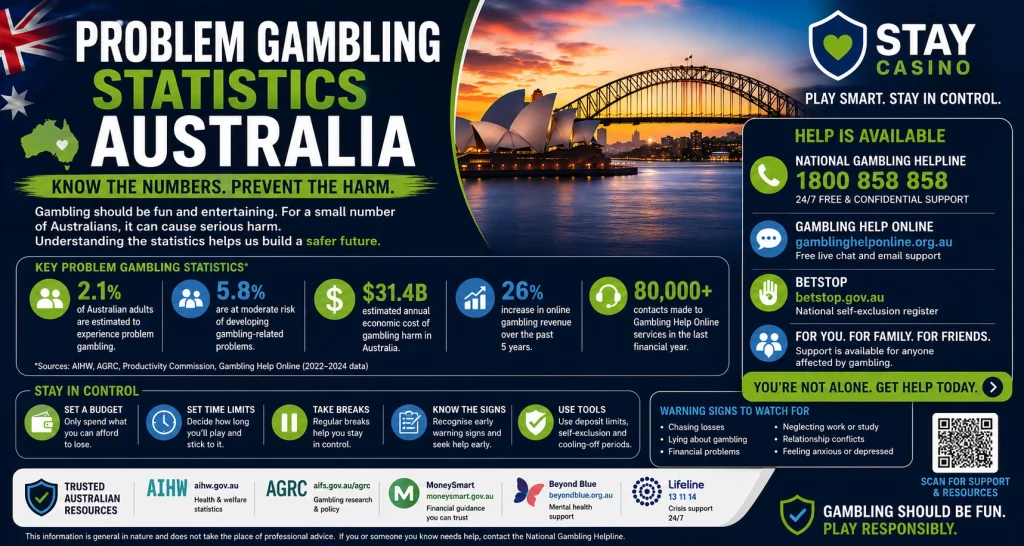
Research consistently shows that gambling remains a common recreational activity for Australian adults. However, participation alone does not automatically indicate harm. The more important statistic is how many people experience difficulties controlling their gambling behaviour.
Most gamblers remain within recreational limits, but a smaller percentage develops behaviours associated with gambling harm. These behaviours may include chasing losses, overspending, hiding gambling activity, borrowing money, and gambling despite negative consequences.
The Difference Between Gambling and Problem Gambling
Not every person who gambles develops a gambling problem. Researchers often classify gambling behaviour into different risk levels.
Low-risk gamblers generally maintain control and experience little or no negative impact. Moderate-risk gamblers may begin experiencing occasional financial or emotional consequences. Problem gamblers experience more severe impacts that affect daily life, relationships, finances, or wellbeing.
The transition from recreational gambling to harmful gambling often happens gradually. Many people do not immediately recognise that their behaviour has changed.
For Stay Casino readers, this is why responsible gambling tools matter. Someone visiting a Login page regularly may still be gambling responsibly, but repeated increases in spending, session length, or emotional involvement can indicate growing risk.
Common Risk Factors Identified by Research
Australian gambling research has identified several factors associated with higher gambling risk. These do not guarantee that a person will develop a problem, but they may increase vulnerability.
Risk factors include frequent gambling activity, easy online access, emotional stress, financial difficulties, social isolation, impulsive decision-making, and exposure to intensive gambling marketing.
Research also suggests that people experiencing anxiety, depression, or significant life stress may be more vulnerable to harmful gambling behaviour.
| Risk Factor | Potential Impact | Observed Effect |
|---|---|---|
| Frequent gambling sessions | Greater exposure to risk | Higher chance of gambling harm |
| Financial stress | Pressure to recover losses | Increased chasing behaviour |
| Online accessibility | Constant availability | More impulsive participation |
| Social isolation | Reduced accountability | Higher risk of hidden gambling |
| Emotional distress | Gambling as escape behaviour | Greater difficulty maintaining limits |
Financial Impact of Problem Gambling
Problem gambling creates consequences beyond gambling losses themselves. Financial harm may include debt, missed bills, loan defaults, reduced savings, relationship conflict, and workplace difficulties.
Many people experiencing gambling problems spend far more than originally planned. What begins as recreational spending may gradually expand into repeated deposits, larger wagers, and attempts to recover previous losses.
This is why gambling support services often recommend budgeting, account limits, and self-exclusion tools. These measures reduce the likelihood of financial escalation.
For players attracted by a casino Bonus offer or a new Sign up promotion, statistics show that responsible budgeting remains more important than promotional incentives. Marketing does not remove gambling risk.
The Growing Importance of Online Gambling Data
Online gambling has become a major focus of Australian gambling research. Mobile devices, digital payment systems, and gambling App access have increased convenience significantly.
Researchers study online gambling closely because constant availability can influence behaviour. Unlike traditional gambling venues, online products can be accessed almost anywhere and at any time.
This increased accessibility makes responsible gambling tools more important than ever. Deposit limits, session reminders, cooling-off periods, and self-exclusion systems help reduce risk in digital environments.
Why Statistics Support Responsible Gambling
Statistics do more than describe gambling harm. They help identify patterns that support prevention. Researchers can determine which groups may require additional education, which products create higher risk, and which interventions appear most effective.
For Stay Casino readers, statistics provide an important reminder: gambling should always remain entertainment rather than a financial strategy. Understanding the numbers helps players make safer decisions before problems develop.
How Researchers Measure Gambling Harm
Problem gambling statistics are usually measured through population surveys, risk-screening tools, behavioural studies, and support service data. These sources do not always produce identical numbers because they measure different things. Some surveys measure gambling participation. Others measure gambling harm, frequency, spending, debt, or help-seeking behaviour.
This distinction is important. A person may gamble often without meeting the definition of problem gambling, while another person may gamble less frequently but experience serious harm because of financial pressure or loss of control.
Researchers often use screening categories such as low-risk gambling, moderate-risk gambling, and problem gambling. These categories help explain that gambling harm exists on a spectrum. Harm does not begin only when someone reaches the most severe level.
Why Moderate-Risk Gambling Deserves Attention
Moderate-risk gambling is important because it may appear less serious, yet it can still cause real harm. A moderate-risk player may overspend occasionally, feel guilty after gambling, argue with family about money, or increase gambling during stress.
If this stage is ignored, the behaviour may become more serious. Early intervention is therefore more effective than waiting until the problem becomes severe.
For Stay Casino readers, this means warning signs should be treated seriously even when the person is still working, paying bills, or appearing functional. Gambling harm often grows behind normal daily routines.
| Risk Category | Typical Behaviour | Recommended Response |
|---|---|---|
| Low-risk gambling | Occasional play with controlled spending | Continue using limits and regular breaks |
| Moderate-risk gambling | Overspending, guilt, chasing losses, stress | Reduce gambling and use support tools early |
| Problem gambling | Loss of control, debt, secrecy, repeated harm | Stop gambling and contact professional support |
| Family-affected gambling | Partner, parent, or friend impacted by gambling harm | Use family support and financial protection advice |
| Recovery stage | Reduced or stopped gambling after harm | Maintain counselling, self-exclusion, and safeguards |
Product Type and Gambling Risk
Different gambling products carry different risk profiles. Fast, continuous forms of gambling may create higher risk because they allow repeated decisions in a short time. Products with rapid outcomes may encourage longer sessions and stronger chasing behaviour.
Poker machines, online casino products, in-play betting, and some digital gambling products can create strong momentum because outcomes occur quickly. Slower products may reduce speed, but they still carry risk if spending becomes uncontrolled.
Players who regularly choose Slots should pay attention to time spent, frequency of play, and emotional response after losses. Fast product cycles can make it harder to pause and reassess.
The safest approach is to understand each product before playing and to stop immediately if play becomes emotional, automatic, or financially stressful.
Gambling Harm Beyond the Individual
Statistics often focus on the person gambling, but gambling harm affects wider networks. Partners, children, parents, friends, and workplaces can all experience consequences.
Family members may face hidden debts, emotional stress, broken trust, household budget problems, or repeated conflict. Workplaces may be affected when gambling leads to poor concentration, absenteeism, or financial desperation.
This wider impact is one reason Australian researchers and support organizations treat gambling harm as a public health issue rather than only an individual behaviour problem.
Help-Seeking Behaviour in Gambling Harm
One challenge in gambling statistics is that many people affected by gambling do not seek help immediately. Shame, denial, fear of judgment, and hope of recovering losses can delay support.
This means official support service data may underestimate the true scale of harm. Many people experience gambling-related problems long before they contact a helpline or counsellor.
For players who frequently browse gambling Games, reading support information early can reduce this delay. The earlier someone recognises risk, the easier it is to prevent serious harm.
Comparing Gambling Risk Factors
Interpreting Statistics Responsibly
Problem gambling statistics should be interpreted carefully. They are useful for identifying trends, but they cannot predict exactly what will happen to one individual.
A person with several risk factors may never develop severe harm if they use strong safeguards. Another person may experience serious harm quickly if gambling becomes connected to debt, stress, or emotional escape.
For Stay Casino readers, the practical lesson is clear: statistics should encourage prevention. Limits, breaks, account controls, self-exclusion, and support services should be used before harm becomes severe.
Why Data Should Lead to Safer Choices
Good statistics are valuable only when they lead to action. If research shows that chasing losses, frequent sessions, and online access increase risk, then players should respond by limiting those behaviours.
This means setting strict spending limits, avoiding emotional gambling, taking regular breaks, and using support resources when warning signs appear.
Problem gambling statistics are not just numbers. They represent real people, real families, and real financial consequences. Understanding the data helps turn gambling safety from a slogan into a practical decision.
Age Groups and Gambling Behaviour
Australian gambling research consistently shows that gambling behaviour varies across age groups. Different generations often prefer different gambling products, spend different amounts of time gambling, and experience different forms of gambling-related harm.
Younger adults may be more likely to engage with online gambling products because of digital familiarity and mobile accessibility. Older adults may participate more frequently in traditional gambling activities such as lotteries, racing, or venue-based gambling.
The important point is that gambling harm is not restricted to one age group. Statistics show that problem gambling can affect adults across different stages of life. Risk often depends more on behaviour, spending patterns, emotional factors, and gambling frequency than on age alone.
For Stay Casino readers, this means responsible gambling tools should be used regardless of age or gambling experience.
Gender Differences in Gambling Statistics
Research has identified some differences in gambling participation between men and women. Historically, men have been more likely to participate in certain forms of gambling such as sports betting and racing, while participation patterns among women have varied depending on gambling product type.
However, modern gambling environments continue to evolve. Online gambling, mobile access, and digital marketing have changed participation patterns across many demographic groups.
The most important takeaway is that gambling harm can affect anyone. Problem gambling statistics should not be viewed as applying only to one gender or demographic category.
Online Gambling Growth and Mobile Access
One of the strongest trends in Australian gambling statistics is the continued growth of online gambling. Increased internet access, digital payments, and mobile technology have made gambling more accessible than ever before.
This convenience creates both opportunities and risks. While players can access responsible gambling tools more easily, they can also access gambling products at almost any time.
Mobile gambling is especially important because it removes many traditional barriers. A person can gamble from home, while travelling, during breaks, or late at night. This increased accessibility is one reason why researchers continue studying digital gambling trends closely.
| Demographic Trend | Observed Pattern | Potential Risk Factor |
|---|---|---|
| Younger adults | Higher digital engagement | Frequent online gambling access |
| Older adults | Traditional gambling participation | Long-term gambling habits |
| Mobile users | Increased convenience | Impulse gambling opportunities |
| Frequent online players | Regular account activity | Higher exposure to promotions |
| High-frequency gamblers | More gambling sessions | Greater cumulative risk |
Advertising and Gambling Participation
Australian researchers continue examining the relationship between gambling advertising and gambling behaviour. Advertising exposure may influence awareness, brand recognition, promotional engagement, and gambling participation.
This does not mean every advertisement causes harm. However, repeated exposure may increase temptation for people already experiencing gambling-related difficulties.
Players who frequently encounter gambling advertisements should pay attention to their own reactions. If promotions create strong urges, limiting exposure may be beneficial.
This is particularly relevant for people attracted by frequent promotions, special offers, or repeated marketing messages.
Support Services and Gambling Statistics
Support service statistics provide additional insight into gambling harm. Helplines, counselling services, financial advisers, and self-exclusion programs all collect valuable information about the types of issues people experience.
Common reasons for seeking help include financial stress, relationship conflict, emotional distress, loss of control, repeated failed attempts to stop gambling, and debt accumulation.
Support service data also demonstrates that many people successfully reduce or stop gambling after accessing appropriate assistance.
Comparing Support-Seeking Reasons
Research Sources for Australian Gambling Statistics
Reliable gambling information should come from trusted sources. Academic institutions, government agencies, public health organizations, and gambling research centres provide the most reliable data.
| Organization | Focus Area | Resource |
|---|---|---|
| Australian Institute of Health and Welfare | Health and wellbeing research | aihw.gov.au |
| Australian Gambling Research Centre | Gambling research and policy | aifs.gov.au/agrc |
| Gambling Help Online | Support and education | gamblinghelponline.org.au |
| BetStop | National self-exclusion register | betstop.gov.au |
| MoneySmart | Financial education | moneysmart.gov.au |
Using Statistics to Reduce Gambling Harm
Statistics become valuable when they help people make safer decisions. Understanding demographic patterns, risk factors, support-seeking behaviour, and gambling trends allows players to recognise warning signs earlier.
For Stay Casino readers, the purpose of gambling statistics is not to create fear. The purpose is awareness. Better awareness supports better decisions, healthier limits, and earlier intervention when problems begin to appear.
How Statistics Help Shape Gambling Policy
Problem gambling statistics do more than describe gambling behaviour. They help governments, regulators, researchers, and support organizations understand where gambling harm is occurring and how prevention strategies can be improved.
Australian policymakers rely on statistical evidence when reviewing gambling regulations, advertising standards, self-exclusion programs, consumer protection measures, and responsible gambling requirements. Reliable data helps identify which interventions appear effective and which areas require additional attention.
As gambling technology continues to evolve, statistical monitoring becomes increasingly important. New gambling products, mobile platforms, payment systems, and digital marketing methods create new challenges that require ongoing research and analysis.
For Stay Casino readers, this means gambling safety measures are often based on evidence gathered from large-scale studies rather than assumptions.
Technology and Gambling Harm Prevention
Technology creates both opportunities and risks within gambling environments. On one hand, online gambling increases accessibility. On the other hand, technology can support responsible gambling through account limits, spending alerts, session reminders, cooling-off periods, and self-exclusion tools.
Modern responsible gambling systems increasingly use automated monitoring to identify potentially risky behaviour patterns. These systems may detect unusual spending increases, longer gambling sessions, repeated deposits, or other indicators that suggest elevated risk.
The future of gambling harm prevention will likely involve greater use of digital protection tools alongside traditional counselling and support services.
The Economic Cost of Gambling Harm
Researchers continue examining the broader economic impact of gambling-related harm. The consequences extend beyond individual gambling losses and may include healthcare costs, relationship breakdown, reduced workplace productivity, financial counselling services, legal issues, and community support programs.
Problem gambling can affect households, employers, social services, and public health systems. This broader impact explains why gambling harm is often discussed as a community issue rather than solely an individual responsibility.
Understanding these wider costs helps explain why early intervention remains so important. Preventing gambling harm is often far less costly than responding after severe consequences develop.
| Area Affected | Potential Consequence | Prevention Benefit |
|---|---|---|
| Personal finances | Debt, savings loss, missed bills | Budgeting and gambling limits |
| Mental health | Stress, anxiety, emotional pressure | Early support and counselling |
| Relationships | Conflict, loss of trust | Open communication and support |
| Work performance | Reduced productivity and concentration | Healthy routines and early intervention |
| Community resources | Increased demand for support services | Effective prevention strategies |
Why Early Intervention Statistics Matter
One of the strongest findings across gambling research is that early intervention produces better outcomes than delayed intervention. People who recognise warning signs earlier often experience less financial damage, fewer relationship problems, and shorter recovery periods.
Statistics consistently show that many individuals wait too long before seeking support. They may believe the problem will resolve itself, hope to recover losses, or feel embarrassed about asking for help.
This is why public education remains important. The sooner gambling harm is recognised, the easier it becomes to address.
What Problem Gambling Statistics Mean for Stay Casino Readers
For Stay Casino readers, gambling statistics should not be viewed as abstract numbers. They represent real experiences faced by Australian players and their families.
The most valuable lesson from gambling research is that gambling harm rarely appears suddenly. It usually develops through patterns: increasing spending, longer sessions, emotional gambling, chasing losses, secrecy, and reduced control.
Recognising these patterns early allows players to take action before serious harm develops. Responsible gambling tools, financial planning, self-exclusion options, counselling services, and support organizations all become more effective when used proactively.
Key Takeaways From Australian Gambling Research
Australian gambling statistics highlight several consistent themes:
- Gambling participation is common, but gambling harm affects a smaller portion of players.
- Harm exists on a spectrum rather than appearing only in severe cases.
- Online accessibility increases the importance of responsible gambling tools.
- Financial stress and emotional factors are common risk contributors.
- Early support significantly improves recovery outcomes.
- Family members are often affected alongside the individual gambler.
- Prevention is generally more effective than crisis intervention.
Final Thoughts on Problem Gambling Statistics Australia
Problem gambling statistics provide valuable insight into how gambling affects Australian communities. They help identify risks, guide policy decisions, support research, and improve gambling harm prevention programs.
For Stay Casino readers, the practical message is straightforward. Gambling should remain affordable, controlled, and enjoyable. When gambling begins affecting finances, relationships, emotional wellbeing, or daily responsibilities, it is important to act quickly.
Statistics show that early action works. Setting limits, tracking spending, taking breaks, using self-exclusion tools, and contacting support services can all reduce risk significantly.
The numbers behind problem gambling are important, but the real goal is prevention. Understanding the statistics helps players make informed decisions, maintain control, and protect their long-term wellbeing.






Comments