
Gambling Helpline Australia
What the Gambling Helpline Australia Is
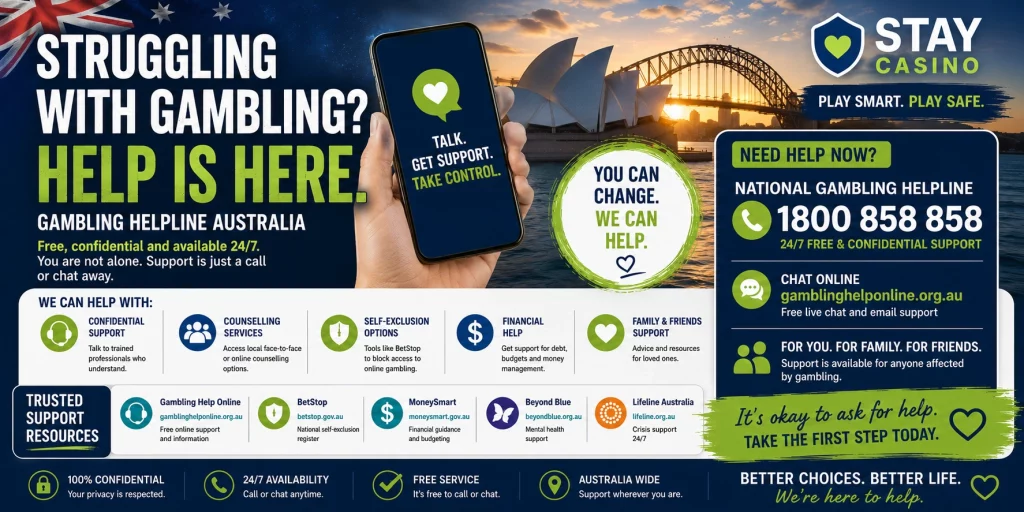
Gambling Helpline Australia is a practical support pathway for people who feel gambling is becoming stressful, harmful, expensive, secretive, or difficult to control. In Australia, people affected by gambling can call the National Gambling Helpline on 1800 858 858 for free, professional and confidential support 24 hours a day, 7 days a week. Gambling Help Online also provides live chat, email support, and self-help advice for anyone affected by gambling.
For Stay Casino readers, this page is designed as a safer gambling resource. If gambling is causing pressure, debt, arguments, stress, or repeated regret, the helpline should be used before any further activity. A person does not need to wait for a crisis. Early contact can prevent deeper financial and emotional harm.
Many people delay calling because they feel embarrassed. This is common, but unnecessary. The helpline exists specifically for gambling-related harm. The person calling does not need to explain everything perfectly. A simple statement such as “I think gambling is becoming a problem” is enough to begin the conversation.
When a Player Should Contact the Helpline
A person should contact the helpline when gambling no longer feels controlled. Warning signs may include chasing losses, hiding gambling activity, borrowing money, missing bills, using gambling to escape stress, or repeatedly planning to stop but returning again.
Another strong sign is emotional pressure. If gambling causes anxiety, anger, shame, sleeplessness, or conflict with family, support should be contacted early. Gambling harm is not only measured by money lost. It is also measured by the way gambling affects daily life.
For readers who usually go straight to the Login page during stress, the safer step is to pause and contact support instead. If the urge is strong, even a short conversation with a trained counsellor can create distance between the feeling and the action.
Why Calling Is Better Than Waiting
Waiting often makes gambling problems harder to manage. Many people believe one win will repair the damage, but this thinking can increase losses. The helpline helps interrupt that cycle by giving the person a real conversation, clear next steps, and access to further services.
A counsellor may help the caller identify triggers, protect money, use self-exclusion, speak with family, or connect with local support. The goal is practical help, not judgment.
For people affected by someone else’s gambling, the helpline can also be useful. Partners, parents, friends, and relatives can call for advice about boundaries, financial protection, and how to talk to someone who may be struggling.
What to Do Before Calling the Helpline
Before calling, it can help to write down a few details. The caller may note how often gambling happens, how much money is involved, what triggers the behaviour, and what consequences have already appeared. This is not required, but it can make the first conversation clearer.
If the person feels too overwhelmed to prepare, they can still call. The service is designed to help people start from wherever they are.
It is also useful to remove immediate triggers before or after the call. Avoid promotional Bonus pages, do not complete a new Sign up process, delete the gambling App, and stay away from Slots or other gambling content while support is being arranged.
| Situation | Why It Matters | Recommended Helpline Step |
|---|---|---|
| Chasing losses | Can quickly increase financial harm | Call before placing another bet |
| Hiding gambling | Creates secrecy and isolation | Ask for confidential support |
| Missing bills | Shows gambling is affecting essentials | Request financial counselling referral |
| Strong urges | Impulsive decisions become more likely | Use phone or online chat immediately |
| Family conflict | Gambling harm may affect others | Ask about family support options |
How the Helpline Fits Into a Recovery Plan
The helpline is often the first step, not the only step. After the first contact, a person may need self-exclusion, counselling, financial guidance, website blocking, bank limits, or family support. These layers work together.
BetStop can also help by blocking access to licensed Australian online and phone gambling providers. Once registered, providers cannot let the person place bets, open new betting accounts, or send marketing messages.
People who spend time browsing gambling Games or searching through casino FAQ sections should redirect that behaviour toward support information and recovery-focused Links. The purpose is to change the routine before the next gambling session begins.
A Safer First Step for Australian Players
Calling the Gambling Helpline Australia is not a sign of weakness. It is a protective decision. It helps people slow down, speak honestly, and receive practical guidance before gambling causes further damage.
For Stay Casino readers, the safest message is clear: when gambling feels difficult to control, stop the session, step away from the device, and contact support. Help is available every day, at any hour, across Australia.
The First Conversation Is Simple
Many people avoid calling Gambling Helpline Australia because they imagine the conversation will be formal, difficult, or embarrassing. In reality, the first call is usually straightforward. The person can explain what has been happening in plain language, even if the situation feels messy.
A caller does not need to prepare documents, exact numbers, or a full history. It is enough to say that gambling has become hard to control, is causing stress, or is affecting money and relationships. The support worker can then ask calm questions and suggest practical next steps.
For Stay Casinoreaders, this first contact can be the point where gambling stops being a private burden. Speaking to someone confidentially helps interrupt secrecy and creates a safer direction.
Common Questions a Support Worker May Ask
A support worker may ask how often gambling happens, what types of gambling are involved, whether money has been borrowed, whether bills are affected, and whether the person has tried to stop before. These questions are not designed to judge. They help identify the level of risk and the type of support needed.
The conversation may also cover triggers. For example, gambling may happen after payday, during late nights, while drinking alcohol, after emotional conflict, or when the person feels bored. Identifying these patterns allows the counsellor to recommend realistic barriers.
| Helpline Topic | Why It Is Discussed | Possible Next Step |
|---|---|---|
| Frequency of gambling | Shows how established the pattern is | Create a reduction or stopping plan |
| Money spent | Identifies financial risk | Refer to financial counselling |
| Emotional triggers | Explains why gambling urges appear | Develop coping strategies |
| Account access | Checks how easy gambling still is | Use self-exclusion or blocking tools |
| Family impact | Shows whether others need support | Suggest family or relationship guidance |
Phone Support, Online Chat, and Local Referrals
Gambling Helpline Australia can be useful in different ways. Some people prefer a phone call because it feels direct and immediate. Others may prefer online chat because it feels more private. Both options can help a person take the first step.
After the first contact, the person may be referred to local gambling counselling services. These services can provide ongoing sessions and more detailed planning. The support may include relapse prevention, financial guidance, family support, and emotional coping strategies.
This layered approach is important because one conversation may start recovery, but long-term change usually requires repeated support.
Why Confidentiality Matters
Confidentiality is one reason many Australians feel safer contacting gambling support. Shame and fear often keep people silent. Confidential services reduce that barrier and allow people to speak honestly.
A person may discuss losses, debt, relationship stress, or repeated relapse without needing to hide the seriousness of the situation. This honesty helps support workers recommend better solutions.
For people who have been hiding gambling for months or years, confidential support can be the first step toward rebuilding trust with others.
Using the Helpline During Gambling Urges
The helpline is not only for planned conversations. It can also be used during strong urges. If a person feels close to gambling again, contacting support immediately can create enough distance to avoid the session.
Urges often feel urgent, but they usually pass. Calling or chatting with someone interrupts the automatic pattern. It moves the person from impulse into conversation.
This is especially useful during high-risk moments such as payday, late nights, major sports events, or after stressful situations.
Building a Plan After the First Call
After contacting the helpline, the next step is turning advice into action. A person may close gambling accounts, register for self-exclusion, block websites, remove payment cards, speak with a trusted person, or arrange counselling.
The plan should be practical and immediate. Waiting several days can allow gambling urges to return. It is better to make small protective changes on the same day as the call.
Recovery becomes stronger when each support conversation leads to a specific action. Even one completed step can reduce risk.
How Stay Casino Readers Can Use This Information
This page should guide readers toward safer choices. If gambling feels controlled and occasional, responsible gambling tools may still matter. If gambling feels stressful or compulsive, the helpline should come before any further play.
The most important message is that help is available before the situation becomes severe. A person can call because they are worried, because they have lost control, because someone else is affected, or because they want to stop before more harm occurs.
Moving From Crisis Support to Ongoing Change
Gambling Helpline Australia is often used during moments of pressure: after a large loss, during a strong urge, when bills are overdue, or when family conflict becomes difficult. However, the helpline can also support longer-term recovery. The first call may create immediate relief, but lasting change usually requires a structured plan.
A recovery plan should include access control, money protection, emotional support, and new routines. This prevents the person from relying only on motivation. Motivation can change from day to day, but systems remain in place even when urges return.
For Australian players, the strongest approach is to combine helpline support with self-exclusion, financial counselling, trusted personal support, and practical digital barriers.
Self-Exclusion After Contacting the Helpline
After speaking with a support worker, many people are encouraged to consider self-exclusion. This can reduce access to gambling and make relapse less immediate. In Australia, BetStop is particularly important for online and phone wagering because it creates a formal national block from licensed providers.
Self-exclusion works best when it is not delayed. If the person knows gambling has become harmful, waiting often gives urges more time to return. Registering quickly can create a protective barrier while the person begins counselling or financial recovery.
Self-exclusion does not solve every problem by itself. It blocks access, but counselling and support help address the emotional and behavioural reasons gambling became harmful.
Financial Counselling and Debt Recovery
Many callers contact gambling support because money pressure has become serious. Gambling-related debt may include credit card balances, personal loans, overdue bills, borrowed money from family, or unpaid rent.
Financial counselling can help organise these problems. A financial counsellor may help build a budget, contact creditors, prioritise essential payments, and create a realistic repayment plan. This reduces panic and helps the person stop viewing gambling as a way to recover losses.
| Recovery Need | Recommended Support | Practical Outcome |
|---|---|---|
| Strong gambling urges | Helpline call or online chat | Immediate interruption of impulsive behaviour |
| Easy account access | Self-exclusion and website blocking | Reduced opportunity to gamble |
| Debt or unpaid bills | Financial counselling | Clear repayment and budgeting plan |
| Emotional distress | Counselling or mental health support | Healthier coping strategies |
| Family conflict | Family support or joint counselling | Better communication and boundaries |
Supporting Family Members and Friends
Gambling Helpline Australia is not only for the person gambling. Family members, partners, parents, friends, and housemates can also contact support. This is important because gambling harm often affects the entire household.
A partner may need help protecting shared finances. A parent may need advice about speaking to an adult child. A friend may want to help but not know whether lending money will make the problem worse.
Support workers can explain boundaries, communication strategies, and referral options. Family support can reduce conflict and help everyone respond more calmly.
Preventing Relapse With a Written Plan
Relapse prevention should be written down. During an urge, it is difficult to think clearly. A written plan removes confusion and gives the person a direct action list.
The plan should include emergency contacts, blocked websites, financial safeguards, replacement activities, and high-risk triggers. It should also identify what to do after a slip. The safest response is to stop immediately, contact support, and strengthen the failed barrier.
A slip does not erase recovery. The danger comes from hiding it or continuing to gamble.
Rebuilding Daily Life Without Gambling
Long-term recovery becomes easier when life begins to feel rewarding without gambling. This means filling time with activities that create stability and satisfaction. Exercise, family time, work goals, study, creative hobbies, volunteering, and financial milestones can all help.
At first, these activities may feel less exciting than gambling. Over time, they create better results. They improve health, confidence, relationships, and money control.
The goal is not only to avoid gambling. The goal is to build a life where gambling has less emotional power.
When to Contact the Helpline Again
A person should contact the helpline again whenever gambling urges return, stress increases, financial pressure becomes overwhelming, or old patterns start appearing. Support is not limited to one call.
Some people call during crisis moments. Others use online chat when they feel tempted. Some return after a slip. All of these are valid reasons to seek help.
Recovery is stronger when support remains available, not only when things become severe.
Recovery Should Not End When the Crisis Feels Smaller
Many people contact Gambling Helpline Australia during a difficult moment, receive useful advice, and then stop using support once the pressure decreases. This is understandable, but it can be risky. Gambling urges often return when life becomes stressful again, when money becomes available, or when the person feels confident too quickly.
Long-term recovery works better when support continues after the first crisis. Regular check-ins help identify weak points early. These may include payday risk, late-night phone use, sports betting temptation, family stress, or hidden financial pressure.
A person does not need to be in crisis to use gambling support. Calling again, using online chat, or arranging local counselling can help maintain stability before gambling returns.
Creating a Monthly Recovery Review
A monthly recovery review can help keep progress visible. This review does not need to be complicated. It should answer a few practical questions: Did gambling happen? Were there strong urges? What triggered them? Was money protected? Did support tools remain active? What needs to change next month?
This type of review prevents recovery from becoming vague. It turns progress into something measurable. It also helps the person see improvements that might otherwise be overlooked.
| Review Area | Question to Ask | Next Action |
|---|---|---|
| Gambling access | Can I still reach gambling accounts or websites? | Strengthen blocking tools and self-exclusion |
| Money safety | Are bills, rent, food, and savings protected first? | Adjust budget or use financial counselling |
| Emotional triggers | Which feelings made gambling thoughts stronger? | Use counselling, exercise, or trusted support |
| Digital habits | Am I seeing gambling ads, emails, or app prompts? | Unsubscribe, block, filter, and remove apps |
| Support use | Did I speak to someone before urges became serious? | Schedule earlier helpline or counselling contact |
Managing Slips Without Losing Progress
A slip can happen during recovery. It does not mean the person has failed completely. The important part is the response. The safest response is immediate interruption: stop gambling, record what happened, block the access point, contact support, and tell a trusted person.
The worst response is secrecy. Hiding a slip can create shame, and shame can lead to more gambling. Honest action reduces damage and strengthens the recovery plan.
After a slip, the person should ask one practical question: which barrier failed? If money was too easy to access, financial controls need improvement. If an account was still open, self-exclusion should be strengthened. If stress caused the slip, emotional support needs to increase.
Building Confidence Through Real-Life Goals
A gambling-free future becomes easier when the person has clear goals beyond simply not gambling. These goals may include paying off debt, rebuilding savings, improving health, repairing relationships, studying, travelling, or creating a calmer daily routine.
Real-life goals give recovery a positive direction. Without them, stopping gambling can feel like only removing something. With them, recovery becomes about gaining something better.
Money that previously went into gambling can be redirected toward visible progress. Even small amounts matter. A saved bill payment, a reduced debt balance, or a family outing paid for without gambling pressure can become proof that change is working.
Using the Helpline as a Long-Term Safety Net
Gambling Helpline Australia can remain part of the safety net for as long as needed. A person may call during an urge, after a stressful event, before payday, after a slip, or when they feel tempted to reopen old accounts.
This ongoing access is important because recovery does not follow a perfect line. Some months are easier than others. Support helps keep difficult moments from becoming major setbacks.
The strongest recovery plans combine helpline contact with self-exclusion, financial controls, counselling, family support, and healthier routines. Each layer reduces risk.
Final Guidance for Stay Casino Readers
Gambling Helpline Australia is not only for emergencies. It is a practical support option for anyone who feels gambling is becoming difficult to control, emotionally stressful, financially harmful, or damaging to relationships.
For Stay Casino readers, the safest step is to contact support early. A single conversation can interrupt an urge, explain self-exclusion, connect the person with counselling, and create a clearer plan.
Stopping gambling is not about shame. It is about protection, stability, and better choices. With the right support, Australian players can reduce harm, rebuild confidence, and move toward a healthier future.






Comments